My dear brothers and sisters in Christ, Peace be with you. In today’s readings, we are going to examine the truth about how the greater the grace that is received from God, the greater our responsibility.
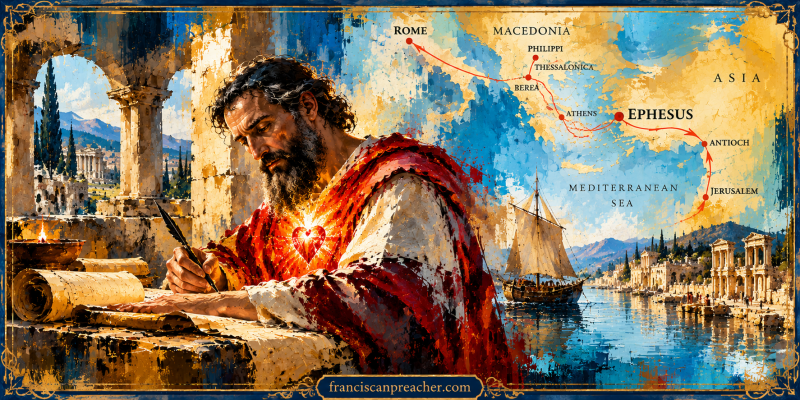
In the first reading from St. Paul’s letter to the Ephesians, Paul explains that God has revealed a mystery previously hidden to other people. The Gentiles are now co-heirs with Israel, sharing in Christ’s promises. Paul has been entrusted with proclaiming this grace to the nations. And the key verse in the reading is when he says, “You have heard of the stewardship of God’s grace that was given to me for your benefit” (Ephesians 3:2). Again, he’s speaking to the Ephesians. Saint Paul understands that the grace he received was not for his own personal benefit, but for the salvation of others. Because every gift from God carries a responsibility toward our brothers and sisters. Our faith, our vocation, our talents and knowledge, they’re not possessions to guard, but gifts to share.
And then we come to the gospel where Jesus calls his disciples to remain vigilant, and he illustrates the difference between a faithful steward and one who abuses his authority. He concludes that accountability increases according to the gifts and responsibilities entrusted to us. Again, the key verse in the gospel is when he says, “Much will be required of the person entrusted with much, and still more will be demanded of the person entrusted with more” (Luke 12:48). So we see here, brothers and sisters, that God does not judge us simply by how much we have accomplished, but how faithfully we have used what he entrusted to us. The greater our responsibility, especially in religious life and leadership, the greater our obligation to serve rather than be served.
In his 19th admonition Saint Francis of Assisi says this to his friars: “Blessed is that servant who does not consider himself any better when he is praised and exalted by people, than when he is considered worthless, simple, and looked down upon.” Francis reminds us that our dignity does not come from office, or the praise of people or popular opinion or the recognition of some kind of authority, but it comes from our humble fidelity to God. That’s where our dignity comes from. In The Journey of the Mind into God Saint Bonaventure emphasizes that spiritual wisdom is not merely intellectual knowledge, but a gift of grace that must transform the heart. The person who truly understands God’s gifts becomes more humble, not more self-important.
Again, Paul received the grace to proclaim Christ. The steward in the gospel received responsibility for his master’s household. Both were entrusted with something belonging to another. The fundamental question therefore is not, what has God given me, but what have I done for others with what God has given me?
My brothers and sisters, if we look at our Blessed Mother, she is a perfect example of this. She was entrusted the Creator of the universe into her arms, into her life, to nurture Him, to raise Him, not so that she could keep Him for herself, but so that she can give Him, the greatest gift of all, to others.
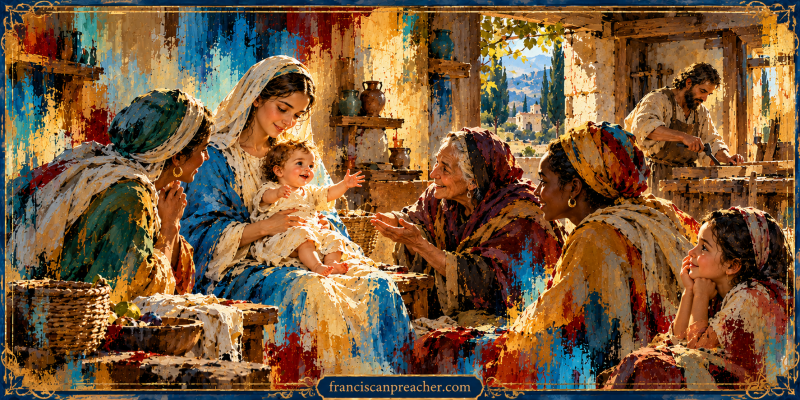
And so too when we receive Him in the Eucharist and He comes to dwell within us. This is the greatest gift of any gift that could ever be given to us because it’s not simply a grace or a blessing, but it is God Himself who comes to us. And He comes to us to abide within our hearts, within our minds, within our souls, but so that we can share Him with others. In the name of the Father, and of the Son, and of the Holy Spirit, Amen. Go in peace. Thanks be to God.
Add comment
Comments