In today's beautiful readings, we see how radical our discipleship, our following of Jesus, really needs to be in order to break away from that crowd of lukewarm Christians and Catholics who, tragically enough, fail to delve deep into their Catholic faith, some for an entire lifetime.
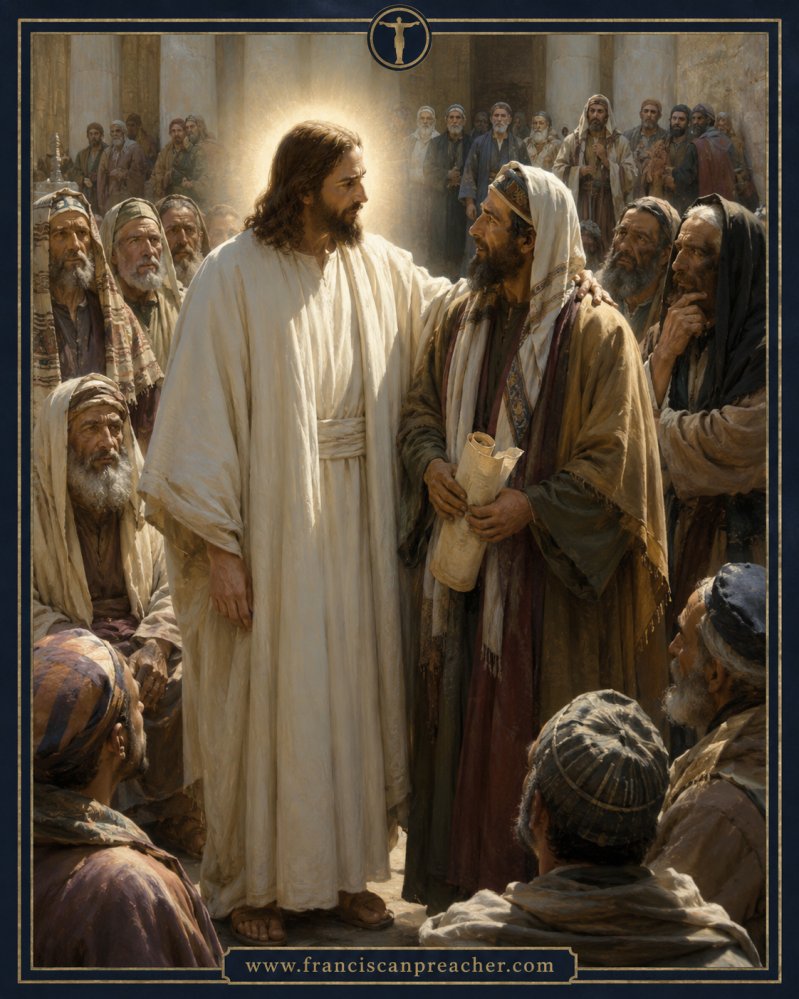
In today's Gospel, Jesus says to the scribe, “You are not far from the Kingdom of God” (Mark 12:34). And he says this because this particular scribe, this man, had moved beyond the mere legalism that many of his peers were enslaved to into genuine spiritual understanding. Unlike many of the other scribes who approach Jesus with hostility or traps, this one recognises the heart of the law: “You shall love the Lord your God with all your heart, with all your soul, with all your mind, and with all your strength… You shall love your neighbour as yourself” (Mark 12:30-31).
So this particular scribe understands that interior love is greater than external ritual sacrifice. But Christ does not yet say to him, “You are in the Kingdom.” No, he says, “You are not far.” And the early Church Fathers saw in this both a praise of the scribe by Jesus, but also an invitation. The scribe intellectually grasped the truth, but he still needed to follow Christ personally, faithfully, radically, to believe fully in him and then enter into the new covenant that Jesus himself had brought.
Here is how several Church Fathers and ancient commentators interpret this passage.
Saint Augustine of Hippo emphasises that love is the fulfilment of the entire law. And I quote, “For what else does God command except love? Seek nothing else from the Scriptures but charity.” Saint Augustine describes how the scribe came close to the Kingdom because he understood that true religion is rooted in charity rather than empty observance. Yet Saint Augustine also stresses that knowledge alone is insufficient unless one clings to Christ himself. Elsewhere Saint Augustine would say, and I quote, “It is one thing to understand the Kingdom of God, another thing to enter into it.” The scribe had insight, but he still lacked discipleship.
How about Saint John Chrysostom? Saint John notes the sincerity of this scribe in contrast to the others. He says, “This man comes not tempting Christ, but desiring to learn.”
See, my brothers and sisters, our approach to God is so important. How do we draw near to God? How do we enter into prayer? How do we walk into a church? How do we leave the church? Do we walk in there with reverence, wanting to learn, wanting to be with Jesus? Or do we just walk in there with pride, not knowing what is going on, judging this person and that person, looking at what people wear and how obnoxious certain people are, and becoming distracted by so many things?
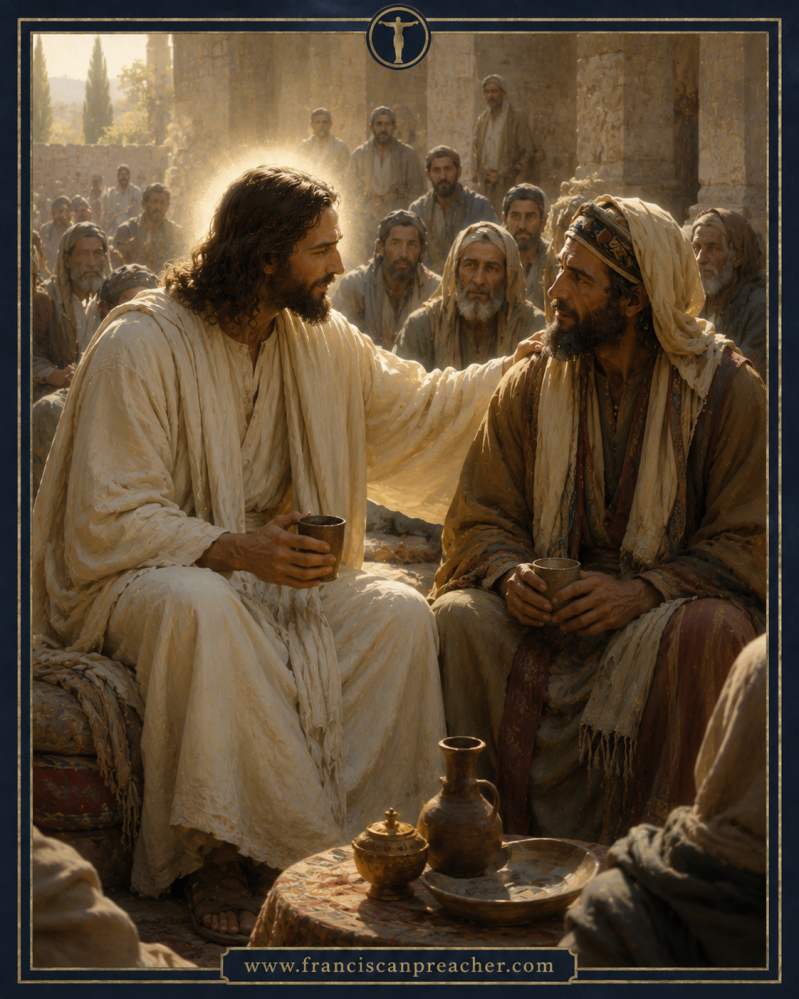
This scribe approached Jesus not to test him, not for the wrong reasons, not in an alienated way, but with focus. Saint John Chrysostom explains that Christ praises him because he answered wisely and recognised that love surpasses sacrifice. Yet even Saint John Chrysostom says Jesus stops short intentionally. “He did not say, ‘You are in the Kingdom,’ but ‘not far from it,’ showing that there was yet something lacking.” What was lacking? Faith in Christ and the courage to become his disciple openly.
Saint Bede the Venerable gives a deeply spiritual interpretation. He says, “He was not far from the Kingdom because he confessed the truth of the law. But he was still distant in so far as he had not yet acknowledged Christ as the way of life.” Saint Bede sees the scribe as standing at the threshold. He understands the commandments, but he has not yet crossed over into the fullness of faith.
We, my brothers and sisters, have been blessed with the fullness of faith: the Catholic faith. But how are we living it?
You know, one of the great signs, one of the seals, if you will, that our faith is authentic is when we have to suffer in some way in order to remain faithful, pure of heart, docile to the Spirit, obedient to the word of Jesus.
Look at how Saint Paul writes to Timothy when he sends him his second letter. He says, “Remember Jesus Christ, raised from the dead, a descendant of David. Such is my Gospel for which I am suffering, even to the point of chains like a criminal” (2 Timothy 2:8, 9).
And then later on in the same reading he says, “This saying is trustworthy: If we have died with him, we shall also live with him; if we persevere, we shall also reign with him” (2 Timothy 2:11-12).
My brothers and sisters, are we dying to ourselves on a daily basis? Are we giving of ourselves? Are we generous? Are we doing something for somebody else every day?
But only with the Spirit of Christ, only with the grace of Jesus at work within us, will we have the strength to be able to love the Lord our God with all our heart, all our soul, all our mind, and all our strength, and to love our neighbour as ourselves.
In the name of the Father, and of the Son, and of the Holy Spirit. Amen.
Add comment
Comments