Peace be with you. Having received the Holy Spirit at Pentecost, we now today are given the beautiful blessing and grace of celebrating the Solemnity of the Most Holy Trinity: the Father, the Son, and the Holy Spirit — three distinct Persons in one Godhead.
My dear brothers and sisters, the readings today are so beautiful and profound that I thought I would simply walk through them with you and then bring everything together at the end.
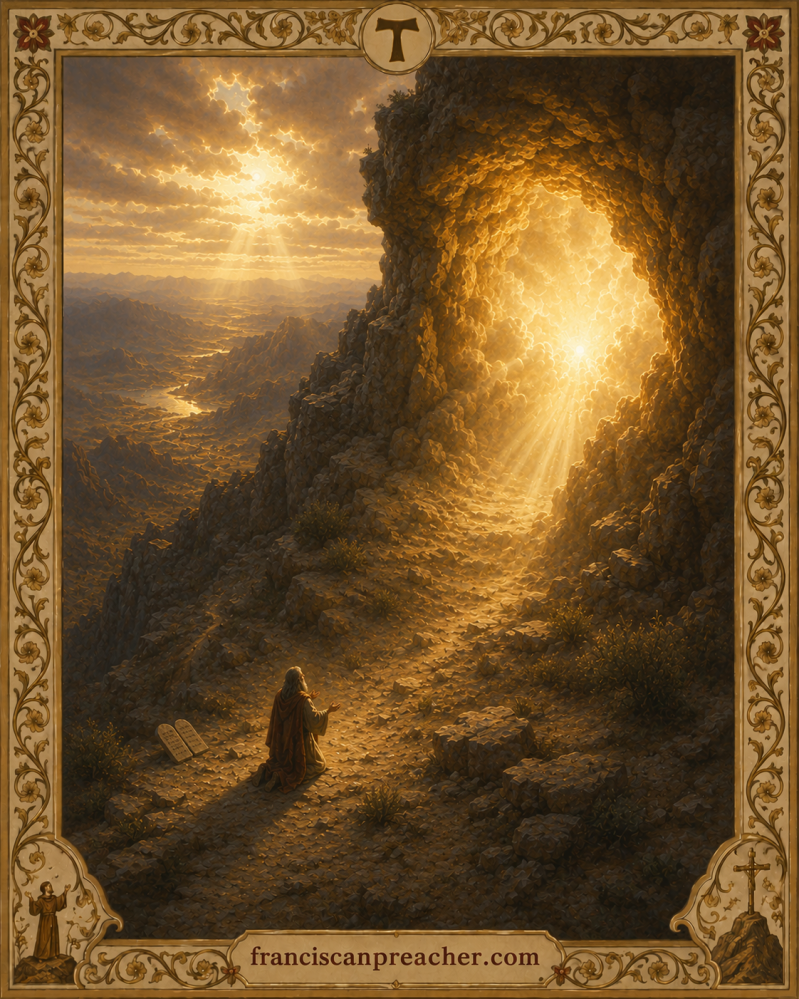
In the first reading, we hear from the Book of Exodus and about Moses’ encounter with God after the people had bowed down before the false idol they had created. This meeting takes place after the terrible episode of the golden calf. We hear:
“Early in the morning Moses went up Mount Sinai as the LORD had commanded him, taking along the two stone tablets… Having come down in a cloud, the LORD stood with Moses there and proclaimed his name, LORD. Thus the LORD passed before him and cried out: ‘The LORD, the LORD, a merciful and gracious God, slow to anger and rich in kindness and fidelity.’” (Exodus 34:4-6)
So, my brothers and sisters, this passage comes at a very dramatic and emotional moment in salvation history. The people of Israel had just committed a terrible sin while Moses was on Mount Sinai receiving the Law from God. In many ways, the covenant seemed shattered and destroyed. Moses had even broken the first stone tablets in anger when he saw the people worshipping the idol after everything God had done for them.
Yet what follows is one of the most important revelations of God’s identity in the entire Old Testament.
Moses goes back up Mount Sinai carrying two new stone tablets, symbolizing that despite Israel’s sin, God is willing to renew the covenant rather than abandon His people. Moses almost instinctively senses this mercy in his heart. The people had proven themselves stiff-necked, stubborn, and unfaithful, yet Moses continually intercedes for them, acting as a mediator between God and sinful humanity. In this way, he becomes a prototype of Jesus Himself, the one Mediator between God and man.
Then comes this extraordinary revelation. God does not define Himself primarily by power or punishment, but rather as:
“A merciful and gracious God, slow to anger and rich in kindness and fidelity.”
This becomes almost a foundational creed throughout the Old Testament. Israel repeats these words again and again in the Psalms and the prophets. It was essential that future generations understand who this God truly is: merciful, patient, faithful, rich in kindness.
Another beautiful detail is that God descends in a cloud. In Scripture, the cloud symbolizes both God’s presence and His mystery. A cloud reveals and conceals at the same time. God truly comes near, yet His fullness still remains beyond our comprehension.
Finally, Moses bows in worship and begs God not to abandon the people despite their sins. The covenant had been ruptured by sin, and yet mercy triumphs over the rupture.
Then, after the Responsorial Psalm, Saint Paul speaks to us in the Second Letter to the Corinthians:
“Brothers and sisters, rejoice. Mend your ways, encourage one another, agree with one another, live in peace, and the God of love and peace will be with you… The grace of the Lord Jesus Christ and the love of God and the fellowship of the Holy Spirit be with all of you.” (2 Corinthians 13:11,13)
When Saint Paul wrote this letter, the Corinthian community was in turmoil. There were divisions, rivalries, scandals, and tensions. Many were even questioning Paul’s authority. Much of the letter is emotional and deeply personal. At times Paul defends himself strongly, but at other times he pleads with them like a spiritual father wounded by the behavior of his own children.
And yet notice how he ends the letter.
Not with anger.
Not with condemnation.
But with reconciliation, peace, encouragement, and blessing.
Do you see the pattern here? Moses and Paul are both reflecting the very heart of God. Instead of abandoning others in frustration, they intercede, endure patiently, and seek reconciliation.
Paul urges them:
“Rejoice… mend your ways… encourage one another… agree with one another… live in peace.”
And then comes one of the most beautiful Trinitarian blessings in all of Scripture:
“The grace of the Lord Jesus Christ, and the love of God, and the fellowship of the Holy Spirit be with all of you.”
The Father who loves us.
The Son who saves us by grace.
The Holy Spirit who unites us into communion.
This is precisely why the Church places this reading before us today on the Solemnity of the Most Holy Trinity.
Then, my dear brothers and sisters, we come to the Gospel:
“God so loved the world that he gave his only Son, so that everyone who believes in him might not perish but might have eternal life.” (John 3:16)
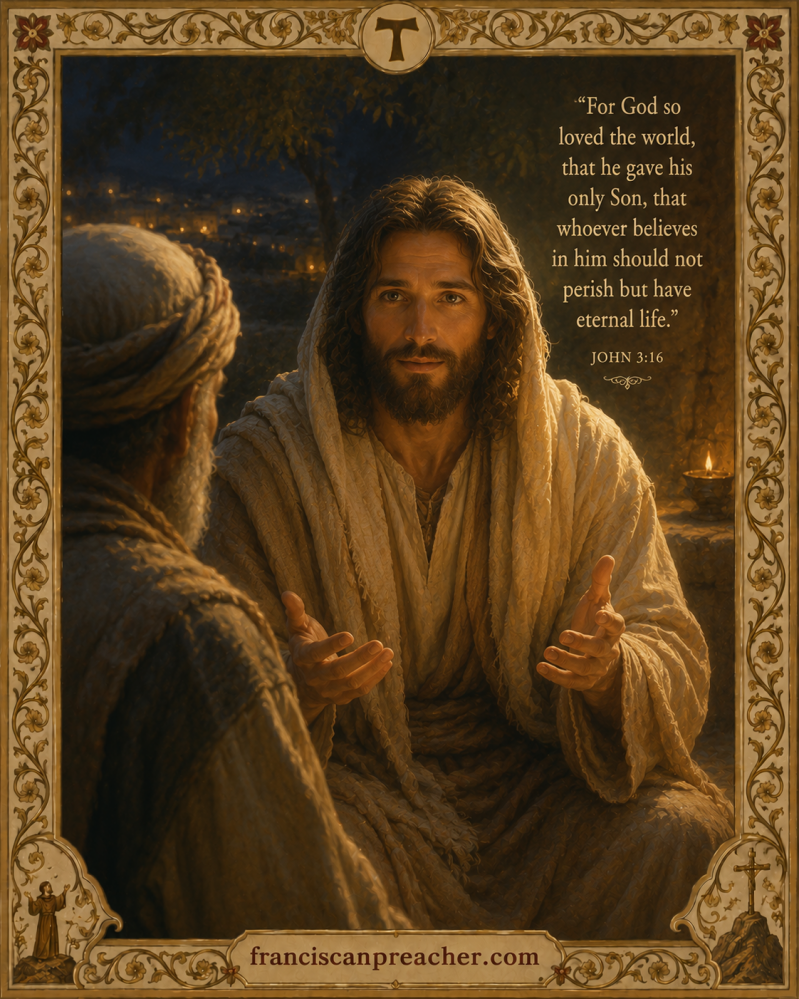
This passage comes from Jesus’ nighttime conversation with Nicodemus in Chapter 3 of Saint John’s Gospel. Nicodemus was a Pharisee and a respected religious leader who came seeking Jesus. Their entire conversation revolves around rebirth, faith, salvation, and eternal life.
Jesus tells Nicodemus that one must be born from above through water and the Holy Spirit in order to enter the Kingdom of God. Nicodemus struggles because he is thinking only in earthly terms. Jesus, however, is revealing heavenly realities.
Then comes perhaps the greatest summary of the Gospel ever spoken:
“God so loved the world that he gave his only Son.”
In the ancient Jewish mindset, many expected the Messiah to come primarily as a judge or political liberator. But Jesus reveals something much deeper. The driving force behind salvation is not wrath, but love.
Notice the intensity:
God so loved the world.
Not merely Israel alone, but the entire world.
Then Jesus says:
“God did not send his Son into the world to condemn the world, but that the world might be saved through him.”
This does not mean judgment is unreal. Rather, it means salvation is God’s deepest desire. Christ first comes as Savior before He comes as Judge.
As revealed to Saint Faustina Kowalska, Jesus continually invites humanity to receive His mercy before the day of judgment arrives.
My dear brothers and sisters, the Father, the Son, and the Holy Spirit — who have been at work throughout all salvation history — are also at work within each one of us.
Jesus says:
“If anyone loves me… my Father will love him, and we will come to him and make our dwelling with him.” (John 14:23)
And Saint Paul reminds us:
“Do you not know that your body is a temple of the Holy Spirit?” (1 Corinthians 6:19)
What an extraordinary mystery.
The Trinity does not merely reign in heaven.
The Trinity dwells within the soul in grace.
So today let us praise Almighty God for all His blessings and graces, but especially for abiding within us, continually refreshing us, purifying us, sanctifying us, and preparing us to be with Him forever.
May God bless you on this Solemnity of the Most Holy Trinity: the Father, and the Son, and the Holy Spirit.
Amen.
Add comment
Comments