My dear friends, welcome to this homily for the 30th Sunday in ordinary time where our Heavenly Father asks us to reflect on whether or not we truly love, him by reflecting on how we treat others, if we are truly loving our neighbor. And so in the first reading God commands Israel to protect foreigners, widows, orphans, and the poor, reminding them of their own suffering in Egypt, because how often do we overlook the way we are treating those who are less fortunate than ourselves? He warns that he hears the cries of those who are struggling and those who are oppressed. In fact, his very words are, “If he cries out to me, I will hear him, for I am compassionate” (Exodus 22:26). And so the Lord wants us to imitate his compassion, because God's compassion must become the measure of our own behavior. Israel was commanded to remember its experience of vulnerability and extend the mercy that it received from God to others. We can't claim to honor a compassionate god while we ourselves remain indifferent to the suffering of our neighbor.
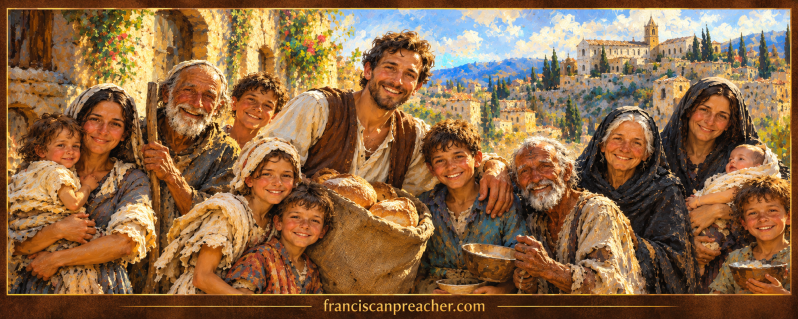
Then in the second reading we hear from Saint Paul's first letter to the Thessalonians, the first chapter, perhaps the earliest writing in the New Testament, where Paul praises the Thessalonians for receiving the gospel despite persecution and becoming examples of faith throughout the region, their conversion from idols to the living God is evident in their lives. He says to them, “and you became imitators of us and of the Lord” (1 Thessalonians 1:6). St. Paul is saying that authentic conversion is not simply abandoning false gods, but learning to imitate the true one Christ our Lord. The Thessalonians proclaimed the gospel not merely through words, but through the example of their lives. Our love for God becomes credible when others can recognize Christ in the way we live.
And so in the gospel a scholar of the law asks Jesus which commandment is the greatest. This is a pretty fair question given that there were hundreds of commandments that the Jewish people themselves had created with time, so there was a bit of a debate. But Jesus identified love of God and love of neighbor as the two inseparable commandments, hand in, hand upon which the entire law and the prophets depend. Jesus in reference to the love of neighbor says, the second greatest commandment is like it “You shall love your neighbor as yourself” (Matthew 22:39). Jesus does not present two unrelated commandments. No, he reveals that love of God and love of neighbor belong together. 43 Our prayer, worship, and religious observances must bear fruit in compassion forgiveness and practical charity.
Ask yourself because it is indeed difficult to gauge whether or not we truly love God sometimes given our behavior, but he has given us a way to know. He who is invisible has given us our brother and sister whom we can see whom we can serve with our own hands. And if we love them, if we love everyone, with the love of God, then you know what that means? That's good news. It means you truly love God. It's a simple as that. I love the way how Jesus always simplifies things for us. We often want to complicate things philosophy Philosophical debates, scientific contradictions, so many arguments over petty differences. But Jesus makes it very simple. “Love the Lord your God” (Matthew 22:37) and the next is very similar. “Love your neighbor as yourself” (Matthew 22:39).
Saint Francis in his earlier rule Says this about the brothers “And they, the brothers, must rejoice when they live among people considered of little value, and look down upon among the poor and the powerless, the sick and the lepers, and the beggars by the wayside.” Now why did Saint Francis say this to the friars? because that opportunity to serve the less fortunate is a proof to them and to all of us that they really loved God. Saint Francis understood that loving God meant drawing close to those whom society neglected. His embrace of the leper became a decisive moment in his conversion. Now, St. Clair, when she wrote to Sister Agnes of Prague in her third letter to the same sister encourages her with these words “Love him totally who gave himself totally for your. love.” In other words, Claire reminds us that Christian love begins with God's total gift of himself. Our love for others is our response to that gift.
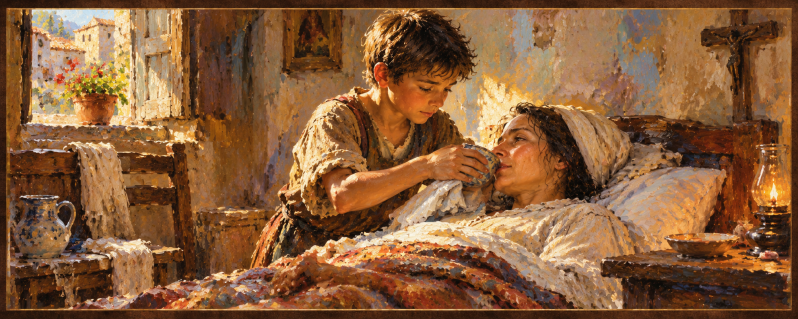
Jesus born in the cold abandoned cave of bethlehem will spur us on to go and clothe the naked and those who are shivering in the cold of the night on our streets, living in tents or in cardboard boxes, And so my friends today's readings teach us whom we are to love that we are to become examples of that love and that because love of God and love of neighbor are inseparable, that we can always gauge whether or not our love for God exists by the way we are treating others, by the way we are serving others, by the way we are sacrificing ourselves for one another. The question for us is simple Can those people who encounter me today recognize something of God's compassion through the way? I treat them.
Add comment
Comments