My dear brothers and sisters in Christ, when we consider everything that the Lord has given to us, everything that is good and holy, even if it comes under the guise of a bit of suffering or pain, is meant to help us to attain to our highest good. And what does the Catechism indicate to be the highest good of every man and woman? The eternal salvation of their souls.
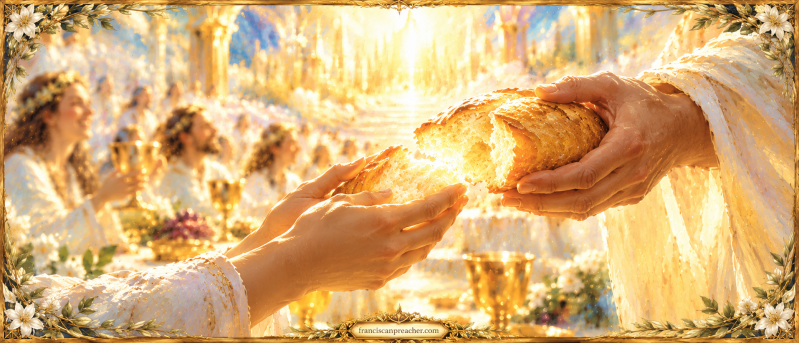
The readings for this 28th Sunday in ordinary time are all united by one beautiful image. God has prepared a banquet and he invites us to share in his eternal life. The prophet Isaiah announces the feast where death will be destroyed. Saint Paul teaches us to trust in the God who provides everything we truly need. And Jesus reveals that the invitation to the kingdom is generous and universal, but it also demands of us a response. God prepares the feast, but it is we who must decide whether to go or not, and to live as his guests.
In the first reading, we hear from the prophet Isaiah, “On this mountain, the Lord of hosts will provide for all peoples a feast of rich food and choice wines. Juicy rich food and pure choice wines” (Isaiah 25:6).
Heaven is God's invitation to all humanity. The Prophet Isaiah's vision is remarkable because the banquet is prepared for all peoples, not merely one nation. The image anticipates the universal invitation of Christ to that heavenly banquet which is not something we earn or prepare for ourselves, but it is God's generous gift.
The reading goes on in this way. “On this mountain he will destroy the veil that veils all peoples, the web that is woven over all nations. He will destroy death forever” (Isaiah 25:7–8).
My brothers and sisters, this banquet is ultimately a picture of our eternal salvation. God isn't merely offering us an earthly and temporal happiness. He is promising us something far greater, a victory over death itself, fulfilled through the death and resurrection of Christ.
In the second reading from St Paul's Letter to the Philippians, we hear these words from Saint Paul, “In every circumstance and in all things, I have learned the secret of being well fed and of going hungry, of living in abundance and of being in need, I can do all things in him who strengthens me” (Philippians 4:12–13).
My brothers and sisters, the person who possesses Christ can do all things because of the grace that he gives to that person. The person who possesses Christ already possesses the greatest treasure. Saint Paul has learned not to measure his happiness by earthly abundance or deprivation. His strength comes from his union with Christ.
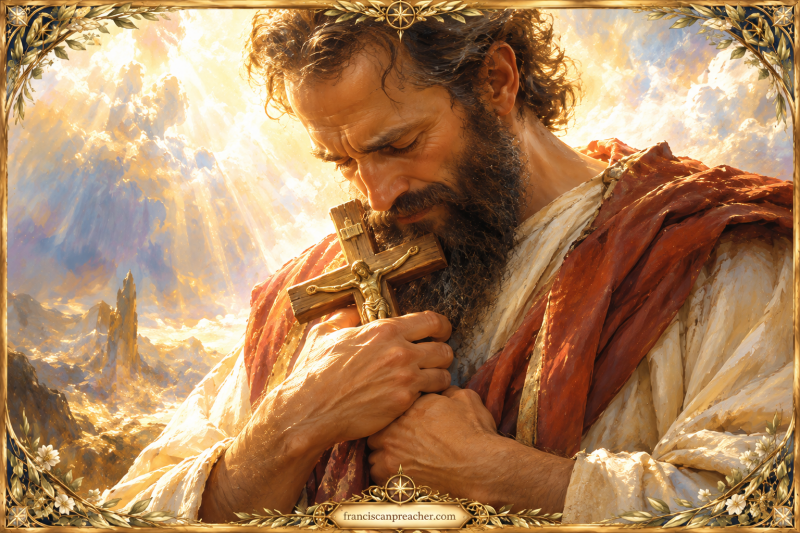
This is the disposition of someone preparing for the heavenly banquet. This is the attitude of someone who understands that they are but pilgrims, journeying through this world, and through God's grace and mercy, trying to make it safely to the ports of eternal life. The ports of heaven.
This contrasts directly with the invited guests in the gospel, who allow their ordinary possessions and occupations and distractions, and futile treasures to take precedence over the king's invitation.
We hear in the gospel, “The kingdom of heaven may be likened to a king who gave a wedding feast for his son” (Matthew 22:2).
Brothers and sisters, God is not simply inviting us to a place but into a joyous communion with himself. The Father, the Son, and the Holy Spirit. The banquet is a wedding feast. In the biblical tradition, God is the bridegroom, and Christ is the bridegroom who gives himself for the church.
The reading goes on in the Gospel. “Some ignored the invitation and went away, one to his farm, another to his business” (Matthew 22:5).
My brothers and sisters, the tragedy is not that these people are necessarily occupied with bad things, with sinful activities, no. Farming and business are legitimate responsibilities. Their mistake is allowing good things to become more important than God.
How many times do we do that? We say, “Yeah, but it's a good thing. I'm going to a soccer game, so I can't make it to mass. But soccer is a good thing. I'm going to work because I need to pump gas. Gas stations need to be open. It's a good thing.” And I fail to make it to mass or to go to the evening before the Saturday vigil mass. So their mistake is allowing good things to become more important than God.
My brothers and sisters, once we learn that we have been invited to join God forever in paradise, and that he is helping us to make our way there, we can't but share this good news with others. We can't but hope that others will get there as well.
Saint Francis, for example, according to a tradition on the second of August in 1216, after receiving the indulgence from Pope Honorius the third, for the Portziuncula Feast of Mercy, Francis gathered the people there at Portziuncula in the presence of the bishops from Umbria, and joyfully proclaimed as people were walking into that little chapel consecrated to the mother of God, “Fratelli miei, voglio mandarvi tutti in paradiso.”
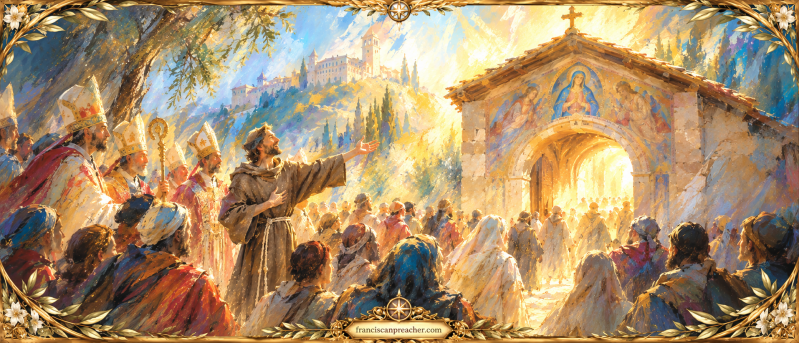
“My brothers, I want to send you all to paradise,” because the indulgence stipulated that anybody who stepped foot into that tiny humble, lowly chapel dedicated to the mother of God, repentant and desiring to live a holy life, would never see the fires of hell, protected in a very special way by God's special graces and blessings and indulgence.
In other words, Saint Francis wasn't just trying to get himself to heaven, but he was trying to help others to get there as well.
So may it be for each and every one of us. May we be his instruments, his ushers, if you will, to help others find their seat at the great and marvellous banquet of the kingdom, and to enjoy his Son forever.
In the name of the Father, of the Son, of the Holy Spirit. Amen.
Go in peace.
Add comment
Comments