My dear brothers and sisters in Christ, we have come to the 22nd Week in Ordinary Time, in which we examine a very important question for our spiritual journey. Why is it that we suffer when we do good? Why is it that God's ways are so different from our ways? And what is it going to take to keep us following Jesus no matter the cost?
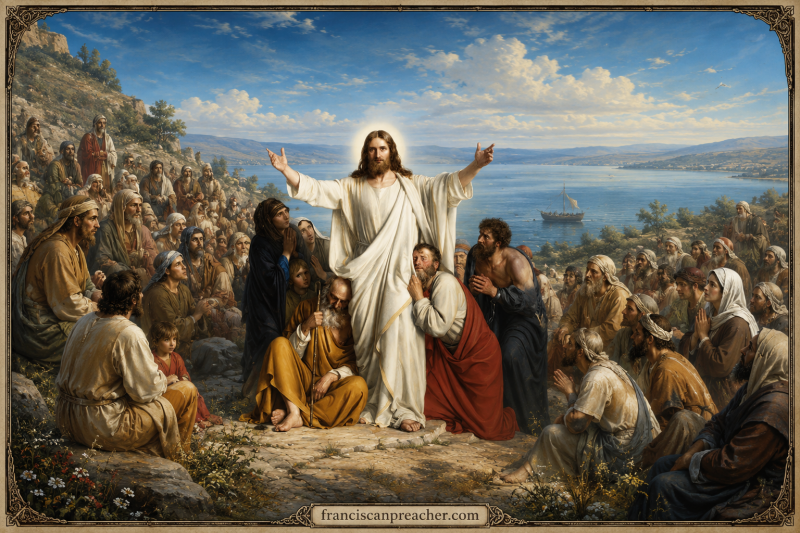
Today's readings come to us from the book of the prophet Jeremiah, from Saint Paul's Letter to the Romans, and from the Gospel according to Saint Matthew. And all three readings are going to speak to us about persevering even in times of difficulty, taking up our cross, and continuing to persevere in the goodness of following the Lord.
In the first reading from the book of Jeremiah, the prophet begins in this way. He says, “You duped me, O LORD, and I let myself be duped” (Jeremiah 20:7). The prophet here is speaking with extraordinary honesty. He's pouring out his heart to God. His prophetic ministry has cost him dearly. Because immediately before this passage, the priest Pashhur has had Jeremiah beaten and placed in chains because of his preaching. And so the prophet is remembering that it is God who inspired him to speak his word. And this inspiration was very strong within him.
The prophet Jeremiah continues. He says to God, “You were too strong for me, and you triumphed. All the day I am an object of laughter; everyone mocks me. Whenever I speak, I must cry out, violence and outrage is my message” (Jeremiah 20:7-8).
Jeremiah lived during, we remember, the final turbulent decades of the kingdom of Judah, leading toward the Babylonian destruction of Jerusalem in 587–586 BC. His message that God had placed on his lips was difficult, precisely because he had to tell his people truths they did not want to hear. The judgment was approaching, and superficial religious confidence would not save them.
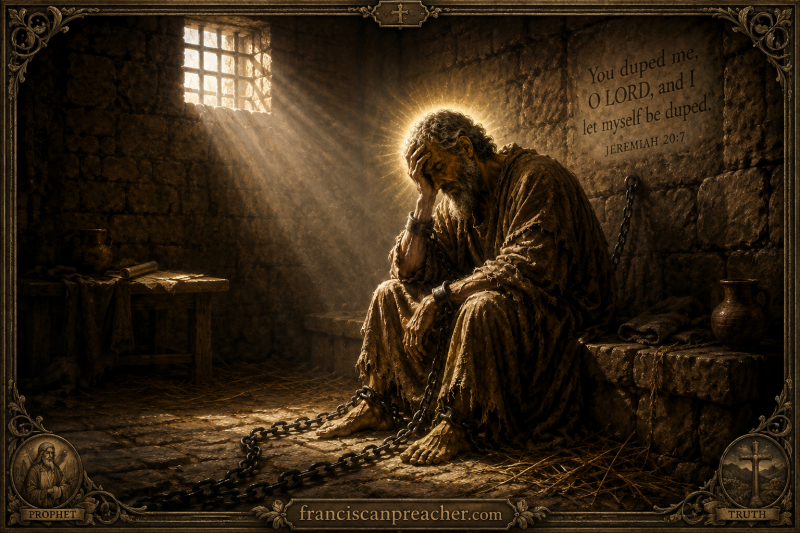
My brothers and sisters, this is one of the great episodes in the life of a prophet, where God's word is no longer merely something Jeremiah speaks, but it has entered him. It burns within him. And although he will pay a price, he needs to continue to pass it on. But our Lord was with him, giving him courage and strength.
In the second reading from Saint Paul's Letter to the Romans, Saint Paul encourages the early converts to Christianity with words to this extent: he encourages them to “offer your bodies as a living sacrifice” (Romans 12:1). This prepares us beautifully for what comes in today's Gospel, because Saint Paul continues by admonishing them, “Do not conform yourselves to this age, but be transformed by the renewal of your mind” (Romans 12:2).
The Greek idea here is transformation rather than mere external improvement. Christianity is not principally behaviour modification. God changes the way the disciple sees reality itself. So it's a change within us that lasts if we allow the Holy Spirit to continue chiselling away. But do not conform yourselves to this age.
When we get to the Gospel, we find that the apostles too are feeling duped. Here they are following the Messiah, the long-awaited one. They said yes when he beckoned them: Peter, John, Andrew, James, Philip, Bartholomew, Thomas, Thaddeus, all of them, when he called and he said, “Come, follow me.” Matthew, he left his tax collecting and followed him because they saw the signs. No man could speak the words that he spoke and do the deeds that he did, the miracles.
They followed him, but they also thought that the Messiah would lead them against their common enemy, the Romans. It was written that the Messiah would lead us against our enemy. But what they couldn't see is that that enemy was something beyond merely another human being, or another country, or entity or creature like a devil. But that enemy was death itself. It's what Scripture calls Jesus's final enemy.
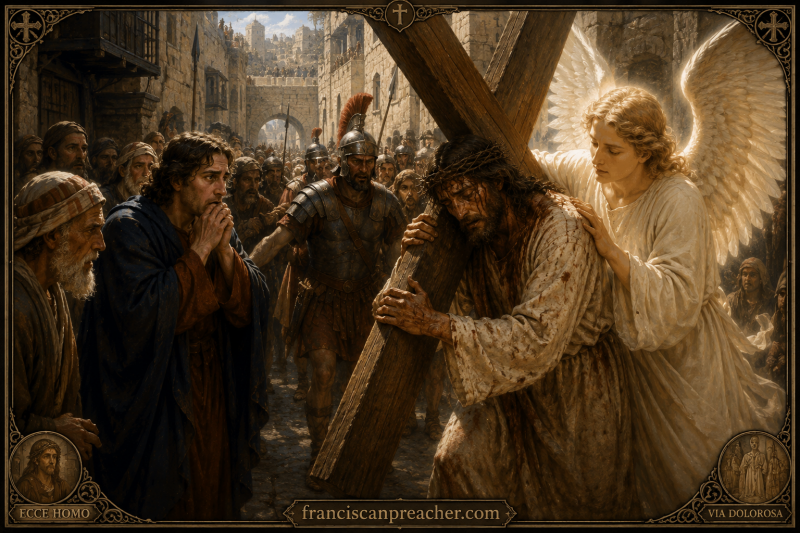
And that is why, with such confidence and such grace, in the Gospel today, we hear that “Jesus began to show his disciples that he must go to Jerusalem and suffer greatly from the elders, the chief priests, and the scribes, and be killed and on the third day be raised” (Matthew 16:21).
Jesus here does not present the Passion as an accidental tragedy, his Passion being the end of all things. No. It was a conduit, a means to his glorification. But the apostles couldn't see that.
In fact, Peter took Jesus aside and began to rebuke him, saying, “God forbid, Lord! No such thing shall ever happen to you”(Matthew 16:22). Peter's reaction is deeply human, isn't it? We probably would have done the same. But Peter would learn that he would need to submit humbly to God's ways. And when he sees Jesus risen from the dead, then and only then did he understand.
So too, my brothers and sisters, let us allow the Lord's word and presence to penetrate our hearts, our lives, our minds, because He has something great in store for each and every one of us. But we must cling to goodness. We must cling to His message when He sends us out into the world with difficult words for the ears of this generation. Purity. Sacrifice. Truth. Freedom from sin. Honesty, forgiveness and mercy.
You can do it. You are God's son. You are God's daughter. Be of heart.
And through the intercession of Saint Francis, and most especially through the intercession of our Blessed Mother Mary, know that God is always with you, and anything you suffer for the cause of righteousness is just one more step to inheriting the kingdom of God.
In the name of the Father, and of the Son, and of the Holy Spirit. Amen.
Go in peace.
Add comment
Comments