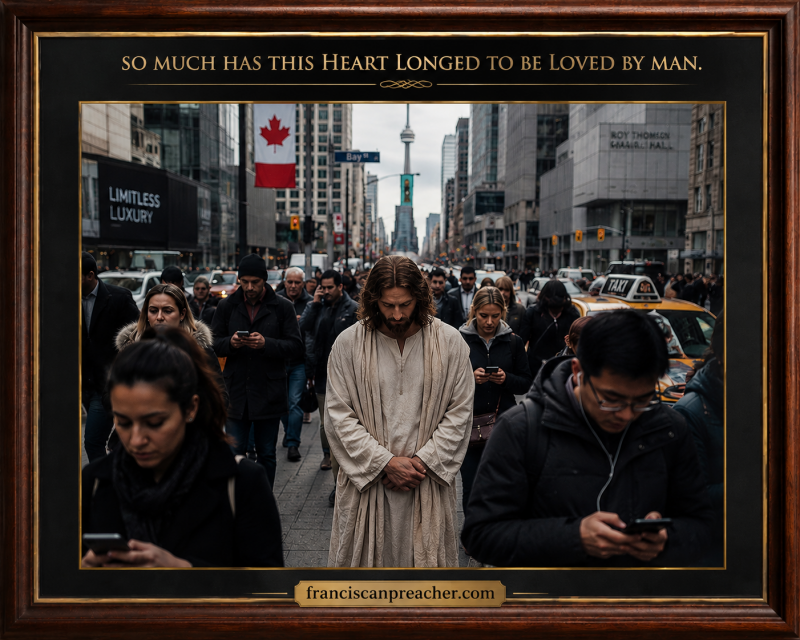
How many times have we asked ourselves whether or not we are loved? And in more specific terms, whether or not we have been loved by God. We go through some difficult times. We pray, and we might not hear the instant reply that we desire, and so we are tempted to think that God is silent, or God doesn't hear, or we're not worth His time. And yet, over and over again, the Lord has continually proven His love for us and continually demonstrated that He wishes to love us as He wishes to be loved Himself by us. And we call this a covenant.
In today's first reading from the Book of Exodus, we hear that in those days the Israelites came to the desert of Sinai and pitched camp (Exodus 19:2). Now, my brothers and sisters, here's one of the most important moments in salvation history, when Israel has just been liberated from Egypt, freedom from slavery. And yet this is not enough, for God now wishes to enter into a covenant relationship with His people. Our Catholic faith, my brothers and sisters, is not merely freedom from sin. It is communion with God, a living, loving, and growing relationship with Him.
And we're told that while Israel was encamped there, they were in front of a mountain. Now, throughout Scripture, my brothers and sisters, mountains are places of encounter with God: Mount Sinai, Mount Carmel, Mount Tabor, Mount Calvary. The mountain symbolizes the ascent of the soul toward God. And we are told that Moses went up the mountain to God (Exodus 19:3). Now Moses continually ascends the mountain because he is a mediator. He is interceding on behalf of the people. And so he foreshadows Christ, the one true mediator between God and humanity, who, with the Cross on His shoulder, ascends the mountain in order to make the greatest intercession of all, which would bring our reconciliation with God about by being nailed to the Cross atop the hill of Calvary, Golgotha.
Now God does not say to the people in this reading, “I brought you to a land,” but rather, “I brought you to myself” (cf. Exodus 19:4). The ultimate goal of salvation is not merely a place, heaven, or blessings, or freedom, but it is union with God. Because imagine getting to heaven, my brothers and sisters, and God not being there. What kind of a heaven would that be?
Now, my brothers and sisters, in today's Psalm we hear: “We are his people: the sheep of his flock” (Psalm 100:3). And so this refrain becomes the bridge to the Gospel, where Jesus sees the crowds as sheep without a shepherd (Matthew 9:36). Yet we are His people, the sheep of His flock, and He tenderly looks after us.
As we know, in the second reading we hear about how Christ, “while we were still helpless,” died “at the appointed time for the ungodly” (Romans 5:6). See, Jesus did not wait for us to become holy before He loved us. No. The initiative always belonged to Him. “Love one another as I have loved you” (John 15:12). Saint Paul goes on to say to the Romans: “Indeed, only with difficulty does one die for a just person, though perhaps for a good person one might even find courage to die” (Romans 5:7). Saint Paul appeals to ordinary human experience here. We might die for someone we love. But Christ died for those who rejected Him. How great is His love for us then?
Saint Paul goes on to say: “But God proves his love for us in that while we were still sinners Christ died for us” (Romans 5:8). This is one of the clearest definitions of divine love in the entire Bible. God's love is not a reward for goodness. Rather, it is the cause of our salvation. We feel that love. We perceive that love. We hear that love spoken in word, and we see it indeed. And we respond. And that response leads to the securing and the acquiring of our salvation through Jesus.
In the Gospel we hear how, at the sight of the crowds, Jesus' heart was moved with pity for them (Matthew 9:36). The Greek word used here is one of the strongest expressions of compassion in the New Testament. It literally refers to being moved in one's deepest interior being. Our Lord, whose Heart has always ached for us, yearned for us, loved us, and thirsted to be loved by us. This, again, is the true covenant, the new covenant between God and men, where He offers us continually His Sacred Heart.
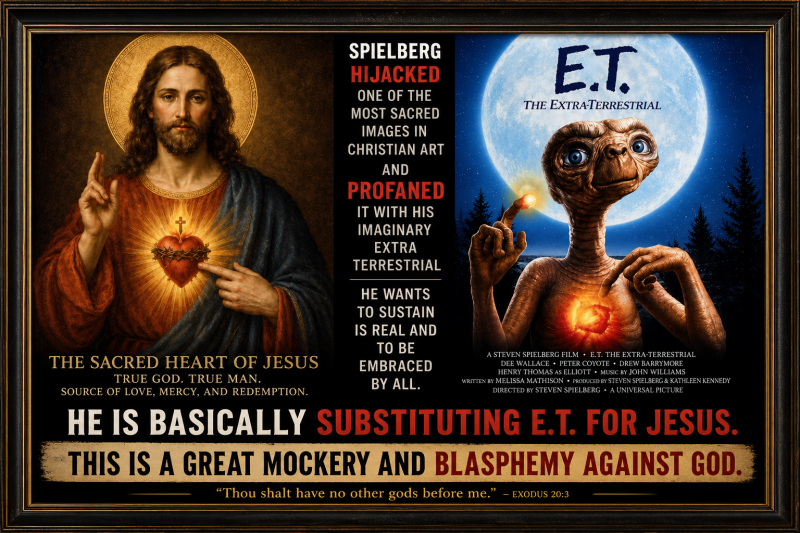
My brothers and sisters, do not replace that Sacred Heart with any of the illusions being offered to you in today's world. Do not replace the Heart of Jesus with the heart of a married man or a married woman, which causes you to commit adultery. Do not replace the Heart of Jesus with the heart of an alien, as we see depicted in the movies. Steven Spielberg with his extraterrestrials offering their hearts for us. Oh, how nice. It's all a deception. It's all an eager attempt to remove the idea that God has a Sacred Heart that beats for us, to undermine Christian teaching, to try to impress upon us that we are not the only ones loved in this universe by God, that He could not have created the entire universe just for us.
Well, He did. Because He loves us. Because we mean more than the universe to Him. But people have a hard time accepting that. People just want to brand us as insignificant, not worthy of such a love. Who are we?
My brothers and sisters, do not fall for the deception of the devil. It's all diabolical. When somebody tries to replace the Sacred Heart of Jesus and give us something else instead of it, something that doesn't exist, it's an illusion. It's a façade. It's a mirage, like seeing water in the desert that's not really there.
This is what Satan offers.
Reject it and continue to embrace that Heart that has loved you from all eternity.
Add comment
Comments