My dear brothers and sisters in Christ, peace be with you. Today we celebrate an extraordinary Franciscan saint by the name of Saint Peter of Alcantara, who lived from 1499 to 1562. Now this was a Franciscan friar who renounced almost everything to possess the one who is everything. He found that great treasure hidden in a field, and sold everything he had in order to acquire that field. Saint Peter of Alcantara presents us with an uncomfortable question. How much of what I consider necessary for happiness is actually keeping me from God? His extraordinary penances were not intended to make suffering an achievement in and of itself. The purpose of his suffering and of his penances was to free his heart from dependence on comfort pleasure and self will, so that he could give himself more completely to Christ by laying down his life for others. My brothers and sisters, this is what makes his life relevant to us. even though we should not attempt to reproduce his extreme austerities. Let us see what some of them really entailed.
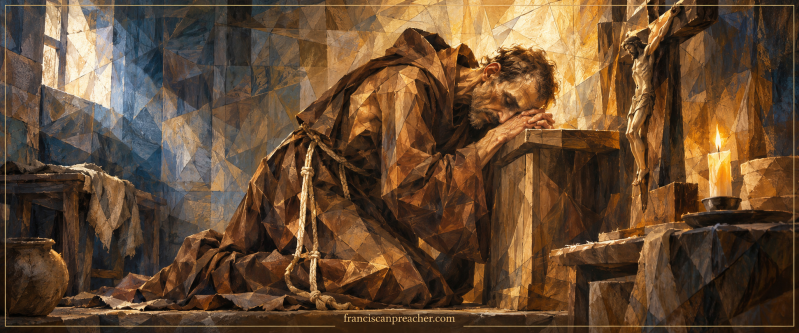
But first, just a brief background on him he was born in alcantara like i said in spain in 1499 and he entered the franciscans as a young man and he was ordained a priest He became one of the great reformers of franciscan life in 16th century spain seeking a return to radical poverty silence prayer and simplicity. His reputation for penance was extraordinary. Saint Teresa of Avila, who knew him personally, and well and regarded him as a holy spiritual guide describes his austerities in the life chapter 27 in this way according to her testimony he practiced something a penance that is called watching that is very little sleep teresa reported that for approximately 40 years he slept no more than an hour and a half each night. sometimes resting while seated or kneeling. He practiced severe fasting. He ate sparingly sometimes going several days with little food and avoided unnecessary indulgence. He practiced extreme poverty His clothing was coarse, his possessions minimal, and his dwelling deliberately uncomfortable. We're told his room was so small it couldn't even fit a bed. Continuous prayer, much of his life was devoted to recollection contemplation and intercession. Saint Teresa also recorded that his body had become remarkably thin through his austerities.
These are historical reports from a contemporary who knew him, not medical recommendations or practices that should be imitated literally, my brothers and sisters. Yet Saint Teresa did not remember Saint Peter merely as an emaciated ascetic. She admired his holiness, his wisdom, his gentleness, and extraordinary love of God. Because his penance was all always accompanied by charity, spiritual discernment, and a service to others. So yes, what can we learn from such an extreme way of life. There is a remarkable passage in St. Teresa's account that answers this question almost directly reflecting on Peter's austerities she acknowledges that not every one can go barefoot or undertake such severe penances. Nevertheless, she insists that there are many other ways of overcoming attachment to the world. and that the Lord teaches these to those who sincerely desire them. That distinction is essential. We are not all called to imitate Saint Peter's penances, but we are all called to imitate his freedom.
Consider what his practices were seeking to accomplish. When we speak about his severe fasting, okay, what can we practice to day? Well, we can eat with moderation, avoid unnecessary, indulgence and occasionally choose simplicity over pleasure. How about his radical poverty? Well, we can buy less, and give generously, and learn to distinguish needs from wants. How about his long periods of prayer? Well, we ought to protect a daily period of silence and prayer, even when we feel distracted, and try to build this routine into our daily living. First, my time with God, and then everything else follows. How about physical discomfort? He practiced physical discomfort in many areas of his life. Well, we can accept ordinary inconveniences without immediately complaining, or losing our patience, or demanding a more comfortable option.

How about the renunciation of his self will? Well, we can accept correction, surrender the need to win every argument, and serve without seeking recognition. Finally, what about detachment from worldly recognition? Well, we can do good quietly. without needing praise attention or acknowledgment. So you see my brothers and sisters none of these requires us to damage our health or neglect our responsibilities or impose severe penances upon ourselves. But indeed prolonged sleep deprivation and extreme fasting are dangerous practices, and they should not be copied unless we really understand and know what they entail and what we are doing.
The important thing is the spiritual purpose behind the sacrifice, the deeper meaning of mortification, the word mortification comes from the Latin mortificare meaning to put to death. Saint Paul writes in his letter to the Colossians chapter three verse five: “put to death then the parts of you that are earthly.” (Colossians 3:5). But what exactly must die, my brothers and sisters, not our humanity, not our capacity for happiness, not the goodness of the body. What must die is the disordered attachment that prevents us from loving God and our neighbor in freedom. That's the keyword freedom. My brothers and sisters, may Saint Peter of Alcantara, through his intercession, help you to find your greater freedom and the love of God in your love of neighbor. In the name of the Father, and of the Son, and of the Holy Spirit.
Add comment
Comments