Today we celebrate a marvelous solemnity in the Church, the feast of two of the greatest pillars that Jesus chose to lead the early Church and by extension, all of us throughout time until his Second Coming. And those two saints are Saints Peter and Saint Paul.
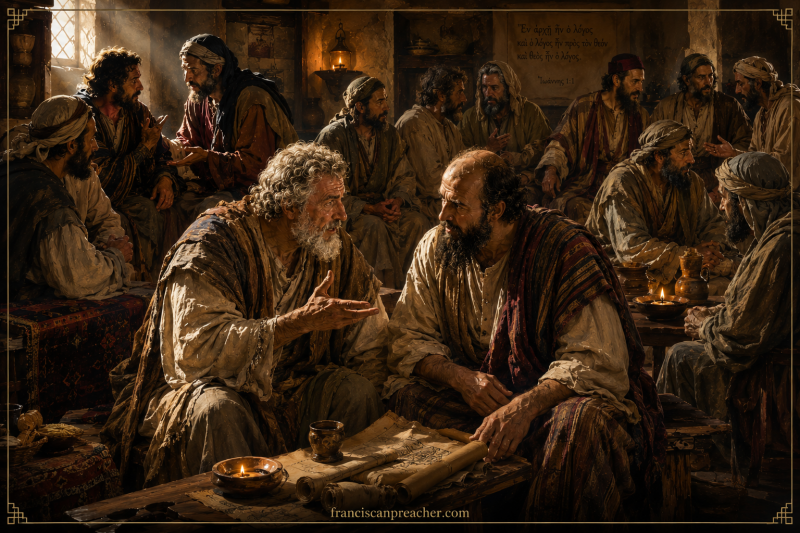
My brothers and sisters, we know that Jesus first encountered both of them through a miraculous intervention. We know that Peter was fishing with his brother and James and John were in another boat. But Peter and Andrew had worked all night, and Jesus sees them on the shore mending their nets, and he tells them to go out again.
And Peter, somewhat impulsive at first, hesitates, but then, perhaps even to prove all the false messiahs wrong, he agreed to go out again. And Jesus was in the boat with them. They let down the nets and they catch a fish is so enormous that the other boats in the vicinity had to come and help out.
Peter looks at Jesus, stunned. He does not yet know that the Lord God of hosts is sitting in that boat with him, but he senses the divine. And he says to Jesus, "Stay away from me, for I am a sinful man." (Luke 5:8).
Saint Paul, on his way to Damascus. He thought that Jesus was a false Messiah, that these claims that he had risen from the dead after such a brutal execution, beaten to a pulp, scourged flesh, torn off of his body, crowned with a crown of thorns, nailed to a cross. There's no way anyone is going to rise from that.
And yet, on his way to Damascus. To do what? To persecute. To inflict pain on those who followed this false Messiah.
On his way there, he sees a great light and so bright as this light that in an instant of a second it blinds him, and he falls to the ground.
And then he hears a voice, "Saul, Saul! Why are you persecuting me?" (Acts 9:4).
Because when the Church suffers, the Body of Christ. He himself, Jesus, suffers alongside with us.
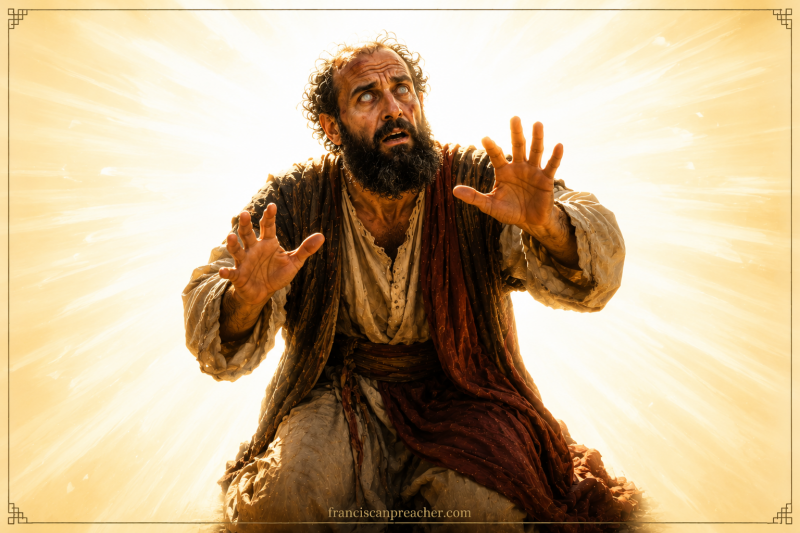
And Saul asks, "Who are you?" (Acts 22:8).
"I am Jesus, whom you are persecuting." (Acts 9:5).
Then Jesus gives him instructions. But suffice it to say that from that day on, Paul's life was changed forevermore.
Salvation had visited both of these apostles, Peter and Paul. For Saul would eventually change his name. So new a person did he become, and so did Saint Peter, for that matter. Jesus changes his name from Simon to Peter, which means rock.
Which is where we get today's first reading from that episode, that event that was recorded for us by Saint Matthew.
Where Jesus asks the apostles, after they had gone out and ministered and cast out demons and healed the sick and even raised the dead. Imagine the commotion. Who are these men? Where did they get this strength? Where did they get this power?
And when they told them, all these people that were healed or raised from the dead, when they told them that they got that power from a man named Jesus, who placed his hands over them in prayer, they began to obviously ask, "Who is this Jesus that you speak of?"
And so Jesus asks the apostles, "Who do people say that the Son of Man is?" (Matthew 16:13).
And they replied, "Some say John the Baptist, others Elijah, still others Jeremiah or one of the prophets." (Matthew 16:14).
In other words, they were all mistaken.
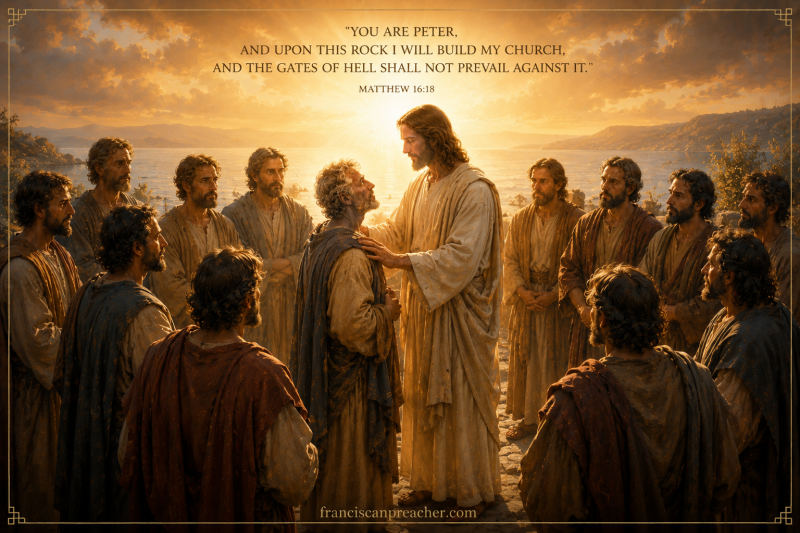
So now Jesus turns to the apostles, the apostles whom he will establish as our point of reference so that we can be led in the truth. And he turns to them and he says, "But who do you say that I am?" (Matthew 16:15).
And this is when Simon Peter shines. This is his moment of glory in his life. For when all others remain silent, God the Father in heaven placed it on the lips and the heart of Peter to declare the truth.
And Simon Peter said in reply, "You are the Christ, the Son of the living God." (Matthew 16:16).
And everyone was shocked.
But Jesus said to him in reply, "Blessed are you, Simon, son of Jonah, for flesh and blood has not revealed this to you, but my heavenly Father." (Matthew 16:17).
And so I say to you, "You are Peter." (Matthew 16:18).
In the original Aramaic, which Jesus would have spoken, he would have said, "You are Kepha," which means rock.
And then Jesus goes on and says, "And upon this rock I will build my Church. And the gates of the netherworld shall not prevail against it. I will give you the keys to the kingdom of heaven. Whatever you, Peter, bind on earth shall be bound in heaven, and whatever you loose on earth shall be loosed in heaven." (Matthew 16:18–19).
Now remember, my brothers and sisters, this is God establishing the supreme authority on earth to speak in his name, Saint Peter, which.
And then if you read the New Testament and the rest of the Gospels, you will see his primacy. Even John, for example, when they're told about the risen Lord and they rush to the tomb, and John is way ahead of Peter. But out of respect to the one that Jesus established as number one numero uno among the apostles, he waits.
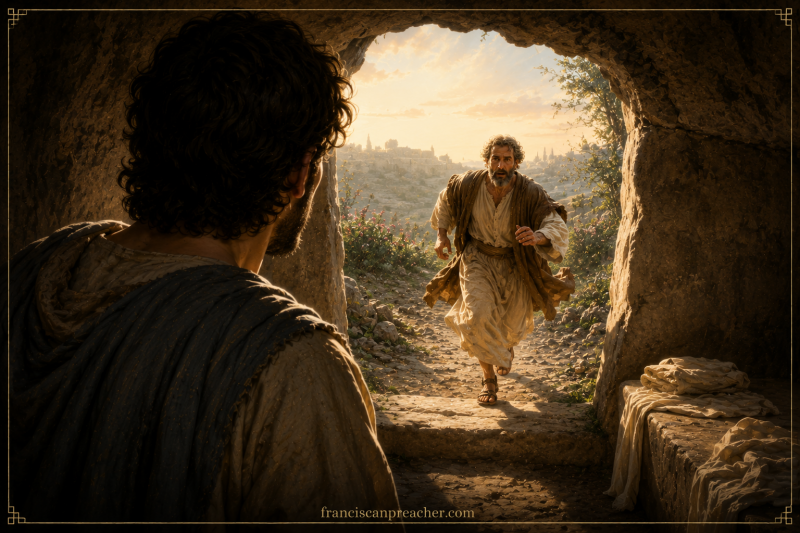
Peter arrives. He enters the tomb, and then John enters behind him.
All these little details that the authors made sure to record for our reflection. Why? Because Peter and the apostles would have successors.
Every bishop in the world is a successor of one of the apostles and the one to be chosen Bishop of Rome is the successor of Saint Peter.
Saint Peter, as we know, who came to Rome inspired by God and who would die in Rome.
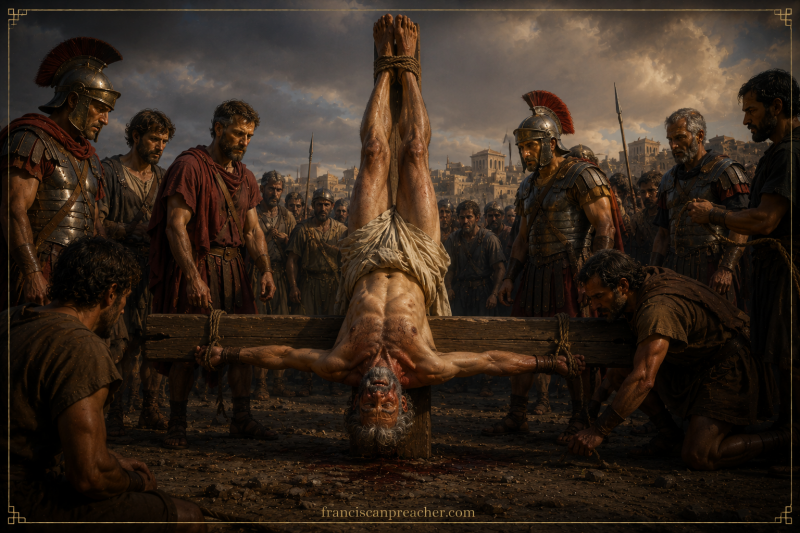
And when his executioners were about to crucify him. Here in Rome they were crucifying Jews in the Holy Land. But now in Rome was even more brutal.
And they asked him because they probably saw his goodness, "Do you have any last wish?"
And he said, "Yes, I am not worthy to die like my Lord. Crucify me upside down."
And they crucified him upside down, an iconic image for the head of the Church.
Raised heavenward is Jesus in the heavens. But on earth, the head closest to earth, he has left to be Peter and his successors.
So let us pray for our Holy Father and any Holy Father that comes after him.
Let us try to listen to what the Lord might be saying to us through him. For he will be guided, just as Peter was guided even by Saint Paul.
We know that in the New Testament Peter was in the wrong about something. And whom did God send to keep Peter infallible in matters of faith and salvation? He sent Paul.
And Peter humbly acknowledges after divine revelation is sent to him that now circumcision is no longer necessary. And new Jewish converts do not need to go through the circumcision, right? Because now baptism replaces circumcision.
That was an early dilemma that they had to deal with, but that God had to divinely guide them through.
My brothers and sisters, we are so blessed as Catholics to have this guidance. But very often we choose to go our own separate way. And we forget that the Lord wants us to make this journey together with our brothers and sisters here on earth, with all the saints in heaven.
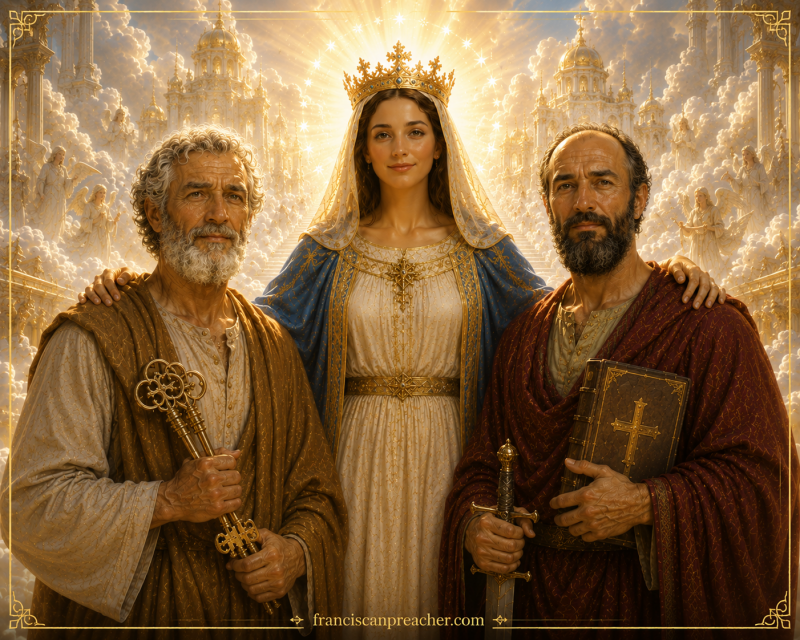
First and foremost, our Blessed Mother, Mary, the Queen of Heaven, the Queen of Apostles, the Queen of Martyrs. And with Saint Peter and Saint Paul who are praying for each and every one of us from heaven.
In the name of the Father, and of the Son, and of the Holy Spirit. Amen.
Add comment
Comments