Peace be with you on this beautiful Solemnity of the Sacred Heart of our Lord Jesus. We remember how much God has loved us, how merciful He has been to us, and how this love will endure forever. We have beautiful readings for this liturgical Year A for this solemnity today, the first being from the Book of Deuteronomy, the second from the First Epistle of Saint John, and the Gospel from Matthew.
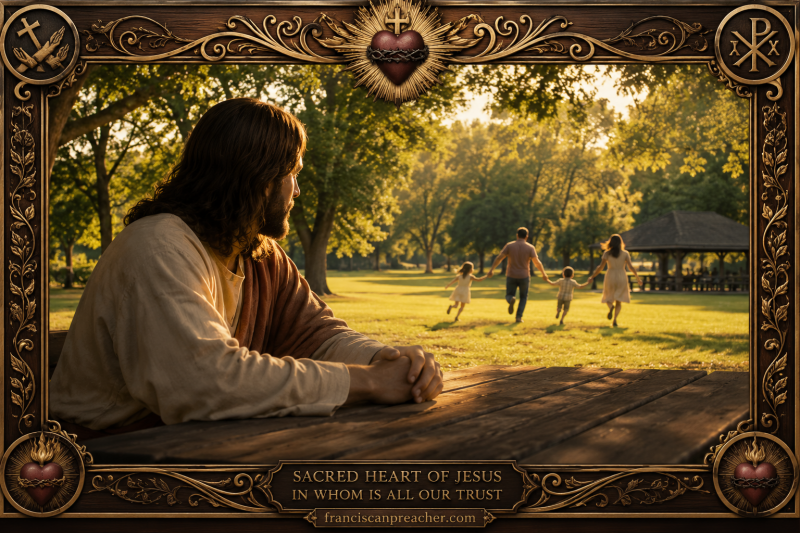
In Deuteronomy we hear: “It was not because you are the largest of all nations that the LORD set his heart on you and chose you, for you were really the smallest of all nations. It was because the LORD loved you” (Deuteronomy 7:7-8). Here, once again, we see Moses appealing to the people of God with the love that liberated them, the love that redeemed them from Egypt. And he's trying to tell them, look at how much God loves you. God chooses Israel. We're told He sets His heart upon His people. Now, when you give somebody your heart, right, what are you saying? We remember that song during Christmas: “Last Christmas, I gave you my heart, and the very next day you gave it away.” No. In other words, I'm giving you myself, everything I have. But what do we do with it?
God setting His heart on His people is not a choice that He made based on their merit. Quite the contrary. For they abandoned Him many times. But rather, the choice is based on love. Love is, in fact, more a choice than an emotion. A decision to persevere in fidelity, in the service of wishing the good for another on a consistent basis. Now this is where the Sacred Heart begins. God does not love us because we are good, or we are holy, or we are worthy. He loves us because He loves us. Before Israel loved God, God had already set His heart upon Israel.
And so, in the second reading from the First Epistle of Saint John, the fourth chapter, we read: “In this is love: not that we have loved God, but that he loved us and sent his Son” (1 John 4:10). So here we read that God is not merely loving, a loving God. No. But God is love itself. Love originates in God. Salvation is God's initiative. It is He who comes looking for us more than we who go out looking for Him. Remember what Jesus once said to the Apostles when He reminded them that it was not they who chose Him, but rather He who chose them? He said: “It was not you who chose me, but I who chose you” (John 15:16). And so we see that this desire to be with somebody, this desire to be with us, is a manifestation of the truth that God is love.
My brothers and sisters, if you want to know what God is like, look at Bethlehem, the cold, abandoned cave in which He chose to be born. Look at Calvary, that mountain upon which His hands and His feet would be nailed to a cross. Look at the Eucharist beneath which, in lowliness, He comes to us. Look at the Sacred Heart, which is pierced through and through, offended by the sins of men on a daily basis, thwarted, discarded, rejected all too often for what is a mere deception of the devil. And yet that Heart continues to love us.
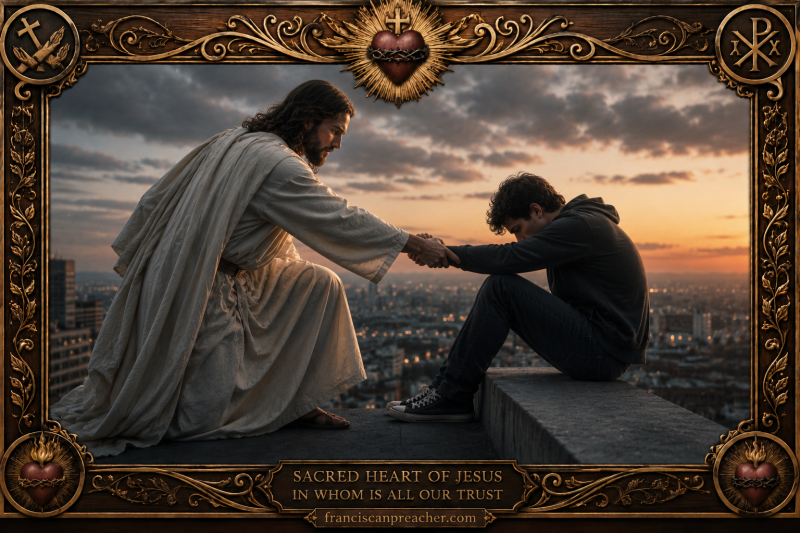
In the Gospel of Matthew, we see the only place where Jesus explicitly describes His own Heart. He says: “Learn from me, for I am meek and humble of heart” (Matthew 11:29). Jesus does not say, “Learn from me, for I am powerful. I am wise. I am glorious.” He says: “I am meek and humble of heart” (Matthew 11:29). My brothers and sisters, the deepest truth about God is not that He is powerful. The deepest truth about God is that He is humble love. This is Bethlehem. The washing of feet. The Eucharist. Calvary. All are manifestations of the same Heart of God.
My brothers and sisters, the Gospel ends with the perennial invitation of Jesus: “Come to me, all you who labour and are burdened, and I will give you rest” (Matthew 11:28). The Sacred Heart is God's answer to today's world of anxiety, loneliness, guilt, exhaustion, discouragement, disillusionment, deceit, and illusion. Jesus does not say, “Come to a theory,” or “Come to a philosophy,” or “Come to a program.” He says: “Come to me” (Matthew 11:28).
My brothers and sisters, keep clinging to the Lord. Keep clinging to Him through the sacraments, through prayer, through encouraging one another in love.
In the name of the Father, and of the Son, and of the Holy Spirit. Amen.
Add comment
Comments